



JOB DETAILS — AT A GLANCE
| Detail | Info |
|---|---|
| Category | Work From Home Jobs |
| Location | United States (home-based) |
| Job Type | Full-time, part-time, freelance, and contract roles |
| Work Mode | Remote / work from home |
| Education Required | Varies widely; many roles are skills-based |
| Experience Required | Beginner to expert paths exist |
| Skills Required | Computer literacy, typing, role-specific software, self-management |
| Salary/Pay | Varies by role — check the official advert; no figure is stated here |
| Who Can Apply | US residents authorized to work in the United States |
| How to Apply | Apply through employer careers pages or reputable job boards |
“Computer jobs” sounds vague until you realize how much of modern work qualifies as computer jobs work from home. If a job’s output is created, processed, or delivered on a computer, it can usually be done from home. That covers an enormous range, from data entry to software engineering, and this guide maps it.
Here you will find the main families of computer jobs work from home, the skills each one actually requires, honest notes on which suit beginners, and practical steps to prepare. The angle is simple: match your current abilities to the right role type, then build from there.
Table of Contents
- 1. Why Computer Jobs Work from Home Keep Growing
- 2. The Main Types of Computer Jobs Work from Home
- 3. Key Responsibilities in Computer-Based Roles
- 4. Skills and Qualifications for Each Role Type
- 5. Setting Up to Succeed in Computer-Based Work
- 6. Career Growth Paths
- 7. How to Apply for Computer Jobs Work from Home
- 8. What to Avoid
1. Why Computer Jobs Work from Home Keep Growing
Every year, more work becomes computer work. Paper forms become web forms, filing cabinets become databases, and meetings become video calls. Each conversion creates another job that can be done from anywhere with a computer and an internet connection.
Employers have noticed the economics. A remote computer-based worker needs no desk in an expensive office, and companies can hire from a national talent pool instead of whoever lives near headquarters. That is why computer jobs work from home now appear in nearly every industry, not just technology.
For workers, the appeal is access. Someone with solid computer skills but no degree can enter data processing, support, or administration from home. Someone with specialized skills can command strong rates without relocating. The computer is the great equalizer: what matters is what you can do with it.
The barrier to entry is genuinely low for many roles. A reasonably modern computer, stable broadband, and the willingness to learn are enough to start. Compare that with trades or licensed professions, and it is clear why computer-based remote work attracts so many career changers.
2. The Main Types of Computer Jobs Work from Home
Data and administration roles are the most accessible computer jobs work from home. Data entry clerks input information accurately and quickly. Administrative assistants manage calendars, documents, and communications for managers or teams. Bookkeeping assistants handle invoices and records. These roles reward accuracy, speed, and reliability over credentials.
Customer-facing computer roles include support agents, live-chat operators, and technical support staff. The computer is your workstation; the phone or chat window is your customer channel. Employers usually provide training and measure you on resolution and satisfaction.
Creative computer roles cover graphic design, video editing, content writing, copywriting, and social media management. These are portfolio-driven: employers judge your past work more than your resume. They suit self-directed people and often offer freelance as well as employed paths.

Technical computer roles include software development, QA testing, IT support, data analysis, and cybersecurity. These need deeper skills and usually certifications or equivalent experience, but they are among the most consistently remote-friendly careers in existence.
Specialist knowledge roles round out the list: transcription, translation, online tutoring, medical coding, and paralegal support. These combine computer work with domain expertise, and the expertise is what employers pay for. If you have a background in law, medicine, education, or languages, look here first.
For non-phone options specifically, see remote non phone jobs, and for a deeper dive into tech paths, how to work from home jobs is a useful companion.

3. Key Responsibilities in Computer-Based Roles
Across all these roles, computer jobs work from home share a common set of responsibilities:
- Producing accurate work on the computer to the required standard and deadline
- Learning and using the employer’s software, systems, and procedures
- Communicating progress, problems, and questions clearly in writing
- Managing files, records, and data securely and systematically
- Meeting productivity or quality targets where the role sets them
- Attending virtual meetings and training sessions as scheduled
- Following data protection and confidentiality rules at all times
- Backing up work and protecting against data loss
- Reporting technical issues that block your work without delay
- Continuously improving your speed and skill with the tools you use
Role-specific duties layer on top. A data entry clerk focuses on accuracy rates and keystrokes. A designer iterates on briefs and meets brand guidelines. A developer writes tested code and reviews teammates’ work. A support agent resolves tickets within target times.
Notice how much of this is about process, not genius. Employers hiring for computer-based remote work want people who follow systems reliably, communicate clearly, and improve steadily. Those habits are learnable at any age.
4. Skills and Qualifications for Each Role Type
Map your skills honestly to role types. For data and admin roles, the core skills are typing speed and accuracy, spreadsheet confidence, attention to detail, and professional email writing. Free typing-practice tools and spreadsheet tutorials can take you from beginner to employable in weeks of steady practice.
Customer-facing roles add spoken communication, patience, and problem-solving under mild pressure. If you have retail or hospitality experience, you already have the hardest parts; the computer skills are the easy addition.
Creative roles need tool proficiency: design software for designers, editing software for video editors, and strong writing samples for writers. Build a small portfolio even before you apply; five good pieces beat a long list of claims. Our data entry tech jobs guide covers the more technical end of data work.
Technical roles need structured learning: programming languages for developers, networking and systems knowledge for IT, statistics and tools for analysts. Certifications help, but portfolios of real projects help more. Start small, finish things, and document what you built.
Specialist roles need your existing domain knowledge plus computer fluency. A bilingual speaker can add translation tools; a former legal secretary can add document-management systems. Your fastest route into computer jobs work from home may be digitizing expertise you already have.
For every role type, the meta-skills matter: self-discipline, written communication, and the ability to learn software independently. Demonstrate these in your application and you are ahead of most candidates.
5. Setting Up to Succeed in Computer-Based Work
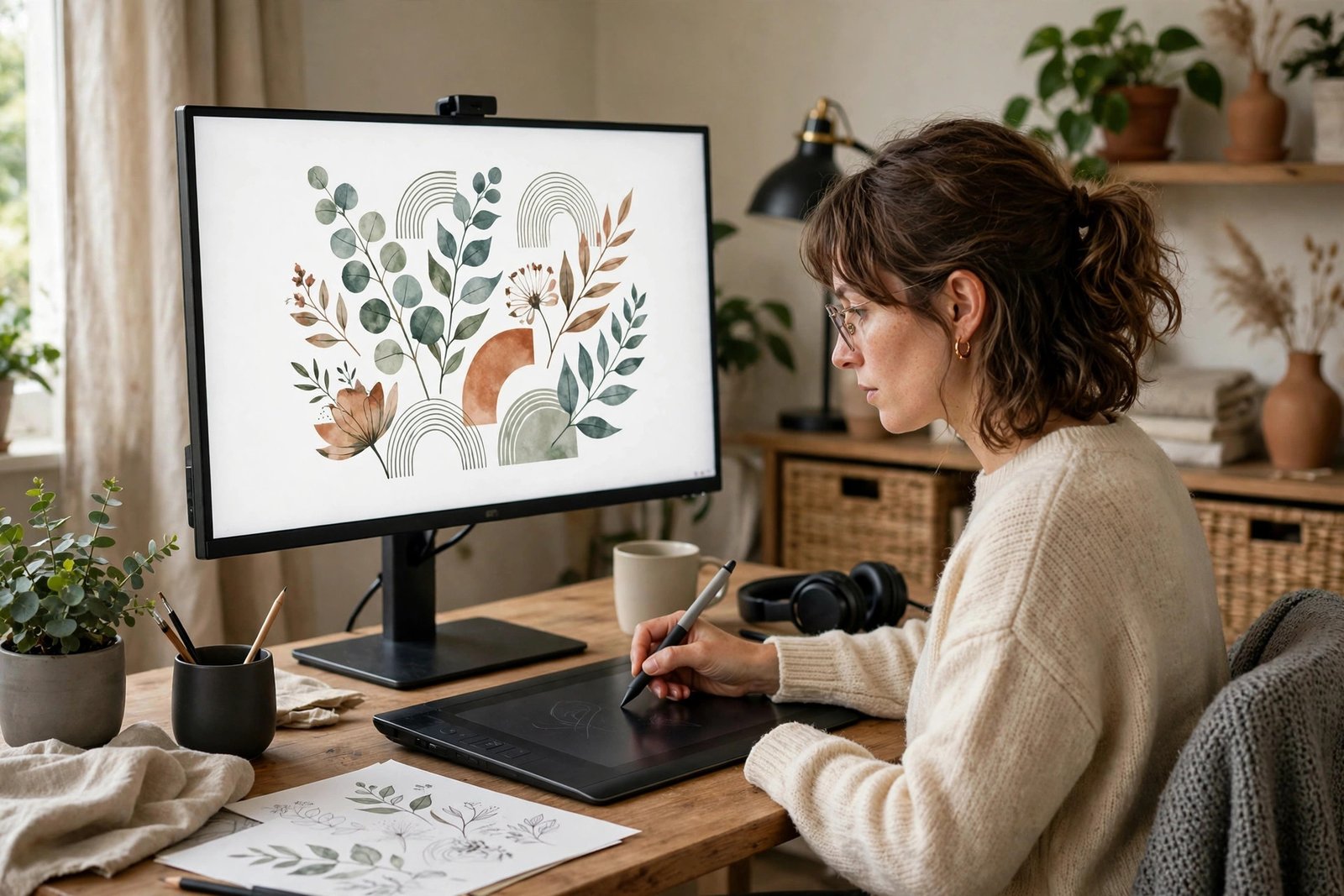
Your computer is your workplace, so treat it like one. Keep it updated, backed up, and free of clutter. Learn keyboard shortcuts for your main applications; the time savings compound daily. A second monitor is one of the highest-return investments a remote computer worker can make.
Organize your digital workspace as carefully as a physical desk. A clear folder structure, consistent file naming, and a reliable backup routine prevent the lost-file panics that derail deadlines. Cloud storage with version history is cheap insurance.
Protect your focus. Computer work is interruption-sensitive: a single notification can cost twenty minutes of concentration. Use focus modes, batch your messages, and agree response-time expectations with your team so you are not anxiously watching chat all day.
Take care of your body. Computer-based work means long hours at a screen, so ergonomics are not optional: screen at eye level, neutral wrists, feet supported, and regular breaks. Eye strain, neck pain, and repetitive-strain issues end more remote careers than layoffs do.
Finally, keep learning deliberately. Software changes constantly, and the most employable computer workers are the ones who stay current. Dedicate a small weekly slot to learning: a tutorial, a new feature, a better workflow. Compounding beats cramming.
6. Career Growth Paths
Computer-based remote work offers some of the clearest growth paths available. Data entry can lead to data analysis, then to analytics or operations roles. Support can lead to senior support, training, quality assurance, or team leadership. Design can lead to art direction or product design. Development paths run from junior to senior to architect or engineering manager.
The pattern is consistent: master your current tools, learn the adjacent ones, document your results, and make your ambitions known. Remote employers promote people whose output is visible and whose skills keep expanding.
Certifications and courses accelerate the climb, especially in technical tracks. But applied skill matters most: the analyst who automated a weekly report, the support agent who wrote the definitive troubleshooting guide, the designer whose work lifted conversion. Build things that matter to your employer.
Lateral moves are underrated. A data-savvy support agent can move into operations; a writer who learns basic analytics can move into content strategy. Computer skills transfer across roles more easily than almost any other skill set, so explore sideways as well as upward.
Freelance and employed paths often intertwine. Many computer professionals start employed, build skills and contacts, then freelance for higher rates, or vice versa. Keep both options in mind as your career develops.
7. How to Apply for Computer Jobs Work from Home
- Identify the role type that matches your current skills, not your dream title.
- Build proof: a portfolio, typing scores, certifications, or documented projects.
- Write a skills-first resume that leads with tools and measurable results.
- Search with specific terms like “remote data entry” or “remote customer support”.
- Tailor every application to the advert’s required skills and tools.
- Prepare for skills tests; typing, software, and scenario assessments are common.
- Confirm you meet the technical requirements: computer, internet, quiet space.
- Have work authorization documents ready for US employers.
One strong tactic: learn the employer’s likely tools before you apply. If adverts in your target field repeatedly mention a particular CRM, spreadsheet function set, or design tool, spend a weekend on tutorials. Mentioning genuine familiarity in your cover letter puts you ahead of candidates who only list “fast learner”.
Avoid the scattergun approach. Ten tailored applications outperform a hundred generic ones, especially for computer jobs work from home where employers screen for attention to detail. A generic application to a detail-oriented role is self-defeating.
For practical setup advice once hired, work at home jobs using computer goes deeper.
8. What to Avoid
- Never pay for job access, “certified” vacancy lists, or mandatory starter kits.
- Be sceptical of adverts promising high pay for very simple computer tasks.
- Do not install software or grant remote access during “interviews” with strangers.
- Avoid roles that communicate only through messaging apps with no verifiable company.
- Never share banking details or your Social Security number before a formal offer.
- Watch for “reshipping” or “payment processing” tasks disguised as computer jobs.
- Check independent reviews of the employer before accepting anything.
- Do not quit a current job until a written offer and start date are confirmed.
A useful filter: real computer jobs work from home describe real work. Vague phrases like “simple computer tasks, huge pay, no experience needed” with no company name are the calling card of scams. Legitimate employers describe duties, tools, hours, and pay with specifics you could verify.

Frequently Asked Questions
What are the easiest computer jobs work from home for beginners?
Data entry, live-chat support, virtual assistance, and transcription are among the most beginner-friendly computer jobs work from home. They need accuracy, communication, and basic computer skills rather than degrees or years of experience.
Do I need an expensive computer?
Usually not. Most roles run fine on a reasonably modern laptop or desktop with stable broadband. Some technical roles benefit from more power, and some employers supply equipment. Check the advert’s requirements before investing.
How fast do I need to type?
It depends on the role. Data entry employers often look for 50+ words per minute with high accuracy; support and admin roles are more flexible. Typing speed improves quickly with daily practice, so it is a very trainable skill.
Can I do computer jobs work from home part-time?
Yes. Many data, support, writing, and design roles are advertised part-time or freelance. Filter job searches by part-time and be clear about your availability in applications.
Are these jobs safe from scams?
No category is scam-free, which is why verification matters. Stick to reputable job boards and employer careers pages, never pay to apply, and research every company independently before sharing personal information.
Will AI replace computer-based remote jobs?
AI is changing some tasks, but it is also creating new roles and making skilled workers more productive. The safest position is to keep learning: workers who combine computer skills with judgment, creativity, and communication remain in strong demand.
How do I prove my skills without experience?
Build evidence: typing test scores, a small portfolio, completed online courses with certificates, volunteer projects, or documented home-lab work. Employers hire proof of ability, and proof can be built without a previous job title.
Conclusion
Computer jobs work from home are not one career but dozens, united by a single fact: the work happens on a screen, so it can happen from your home. Whether you start with data entry, support, design, writing, or code, the formula is the same: match your skills to a role type, prove your ability with evidence, set up properly, and keep learning.
Begin today by auditing your own computer skills honestly, then pick the role family closest to what you can already do. Tailor your applications, verify every opportunity, and build steadily. The computer on your desk is already most of what you need. For setup specifics, continue with work at home jobs using computer.


